


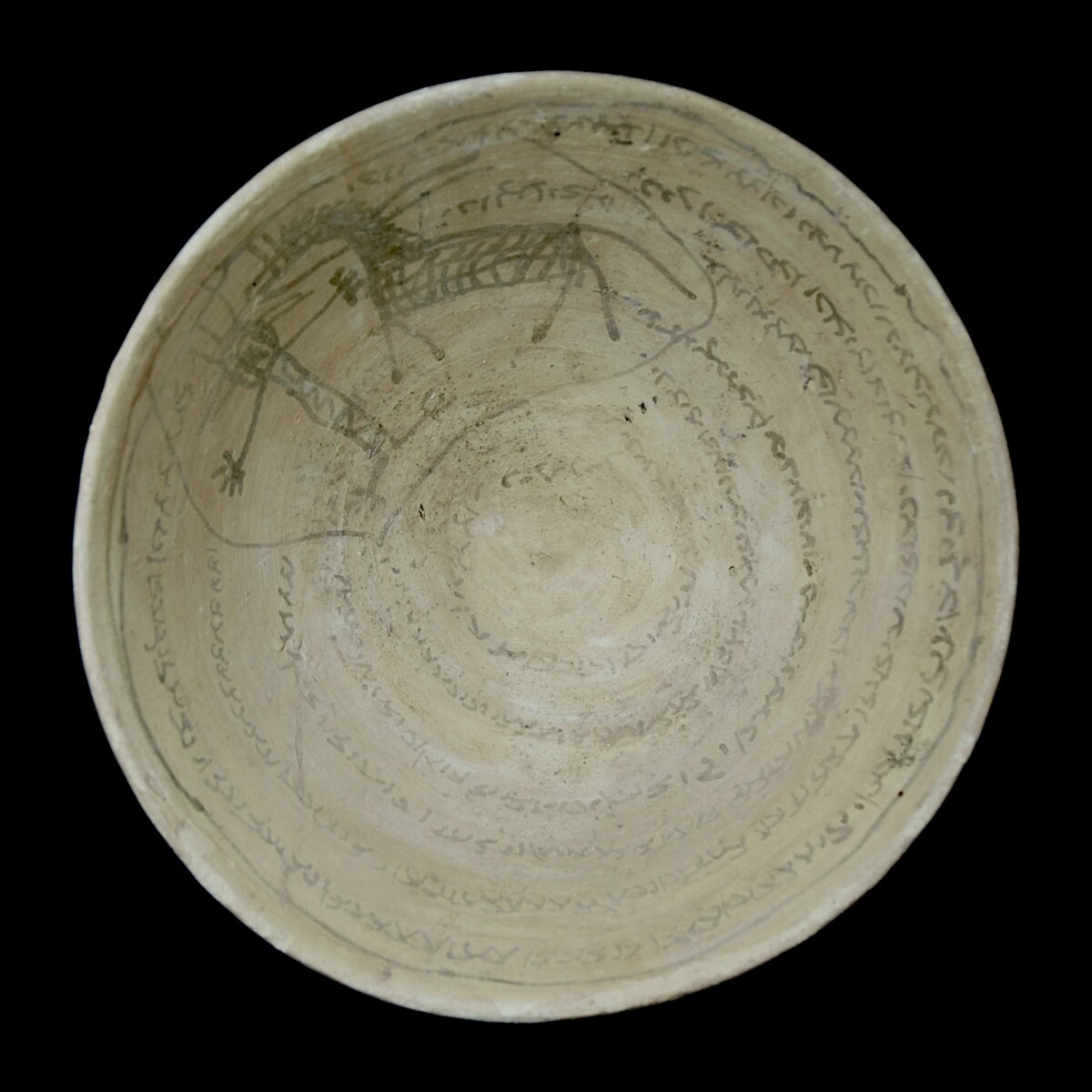

Aramaic Incantation Bowl with the Demon Lilith and Horse
Culture: Mesopotamia
Period: 6th century A.D.
Material: Terracotta
Dimensions: 17.2 cm in diameter
Price: 3 200 Euro
Ref: 6666
Provenance: French private collection, acquired at the Archaeological Centre in Tel Aviv in the early 2000s. Most recently on the French art market.
Condition: Intact
Description: Deep, hemispherical bowl on a rounded ring foot, made of light-coloured clay, belonging to the Mesopotamian group of incantation or magical bowls. These were particularly popular in the 6th and 7th centuries A.D. as a means of expelling demons from the household or keeping them at bay. The interior of the bowl is painted and inscribed in black ink. It depicts the demoness Lilith with raised hair and arms stretched wide to the sides, ending in claw-like hands, symbolizing her helplessness. She is immobilized, staring directly at the viewer, and trapped within the surrounding text. The wildly rearing horse at her right side serves as a symbol of expulsion, urging the demoness to leave the house as quickly as possible. The text begins just below the rim and runs in a spiral of six lines toward the centre of the bowl. It is a so-called “pseudo-inscription,” which imitates Aramaic script but carries no meaningful content. For the likely illiterate owners, the concern was less with legible meaning than with disorienting demons through the spiral movement of the text and trapping them within the bowl’s interior. For this reason, such bowls were buried upside down at house entrances, preventing evil spirits from escaping. The meaningless text had a further advantage: it allowed the bowl to be sold to believers of all religious communities living in Mesopotamia at the time: Jews, Christians, Manichaeans, Mandaeans, or followers of ancient Babylonian cults alike. See for incantation bowls with pseudo-inscription the examples in the Metropolitan Museum of Art (inv. no. 86.11.260) and in the British Museum (inv. nos. 91747 and 103363).