


Important Greywacke Bust of Serapis
Culture: Egyptian/Alexandria
Period: Roman period, 1st century A.D.
Material: Greywacke
Dimensions: 17.5 cm high
Price: 58 000 Euro
Ref: 1580
Provenance: From the collection André Jules Pissaro (1904-1991), acquired prior to 1972. Pissaro emigrated to the USA and with his return in 1972, according to his nephew's statement (copy is available), the bust of Serapis was brought to Paris. Through inheritance in 1992 to his nephew Bernard Pissarro, Paris. Accompanied by a French antiquities passport.
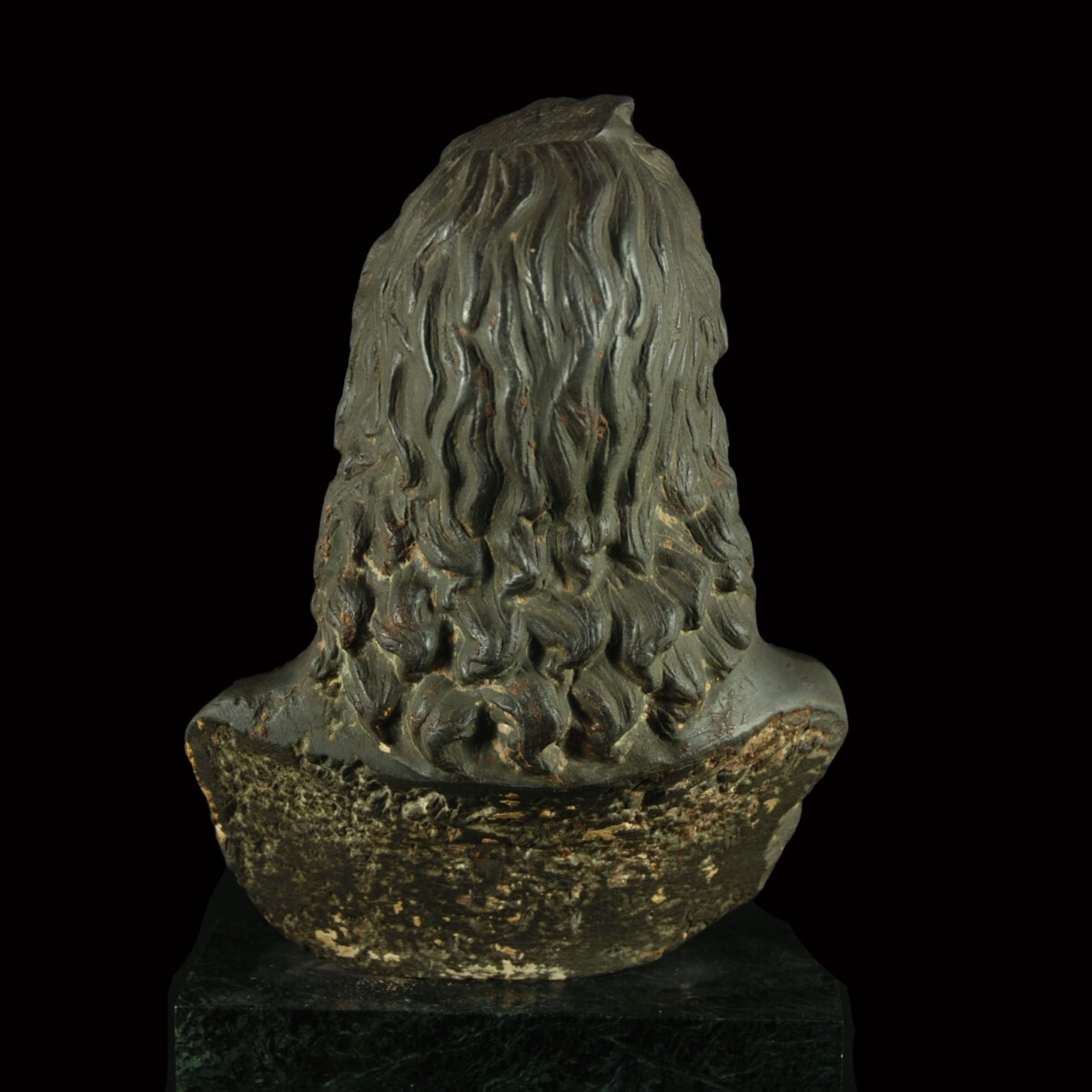
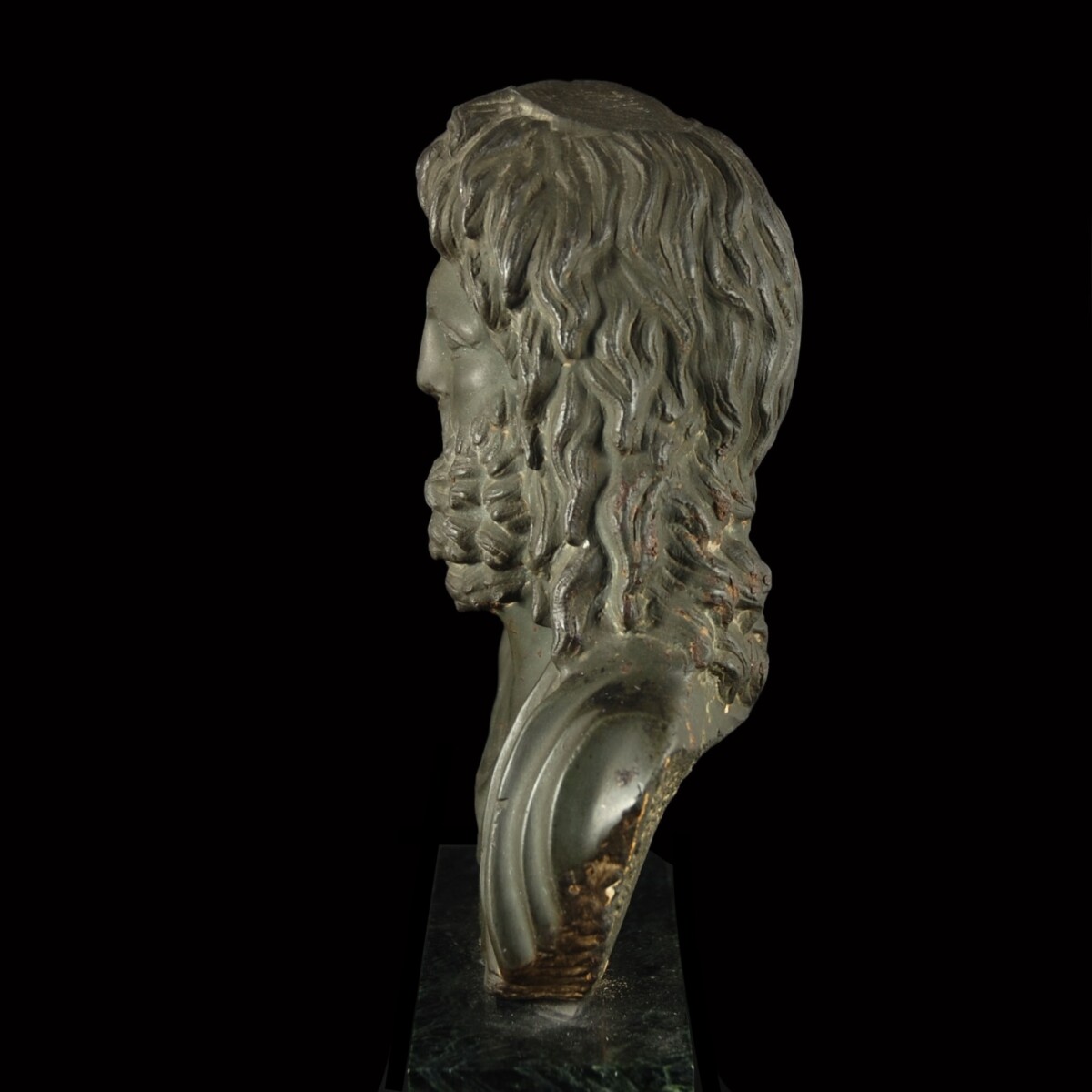
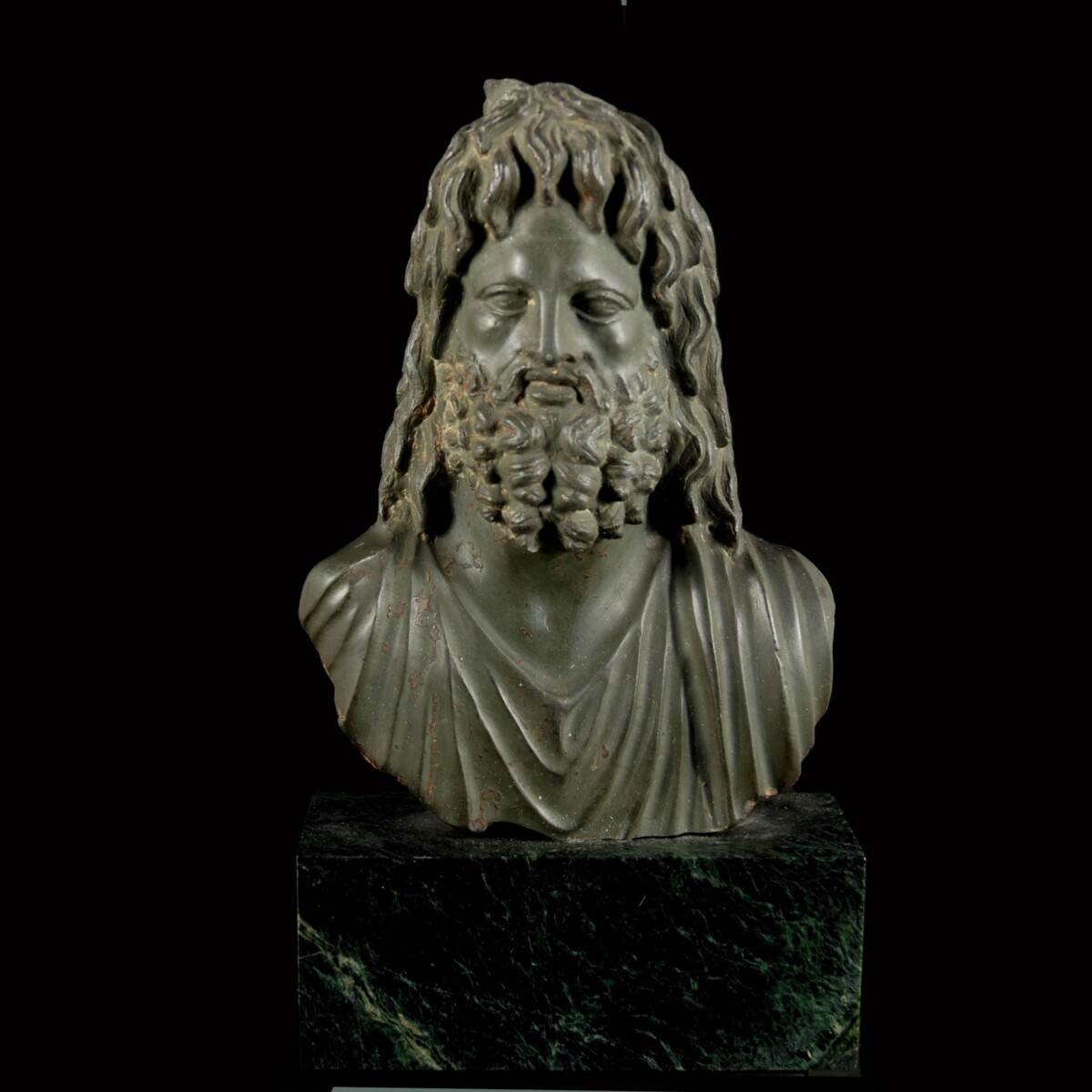
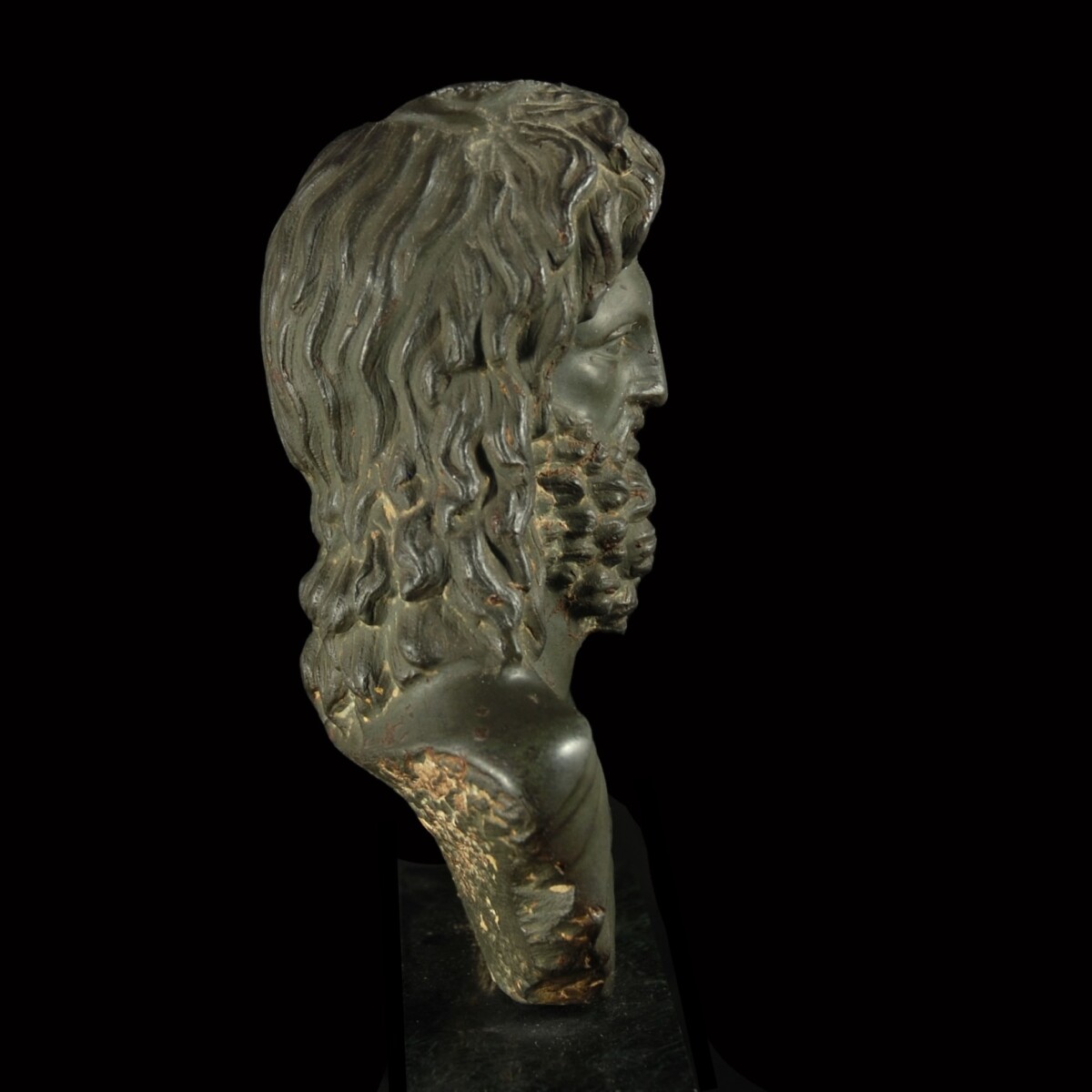
Condition: Unrestored. Kalathos possibly already broken in ancient times. Otherwise only minor encrustation.
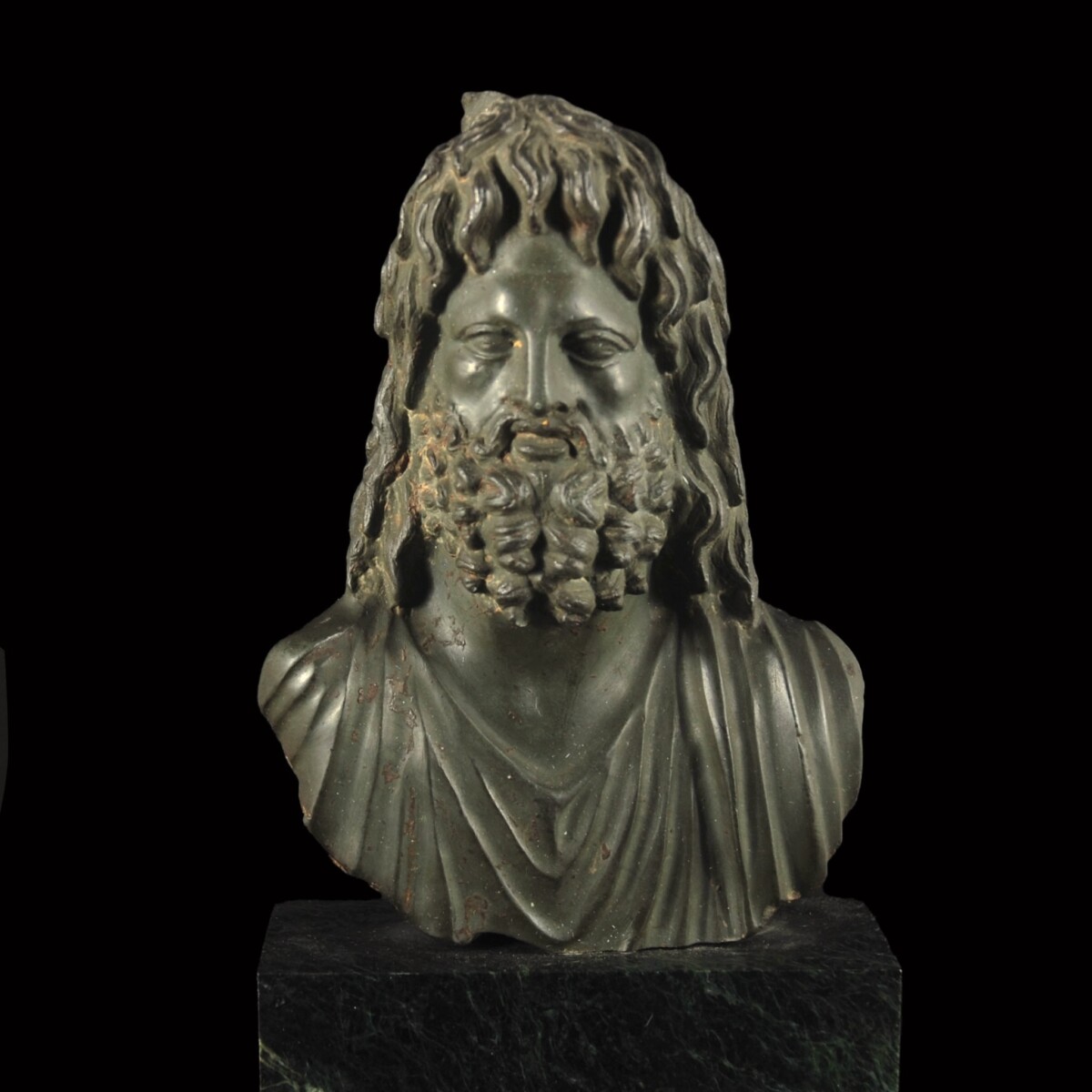
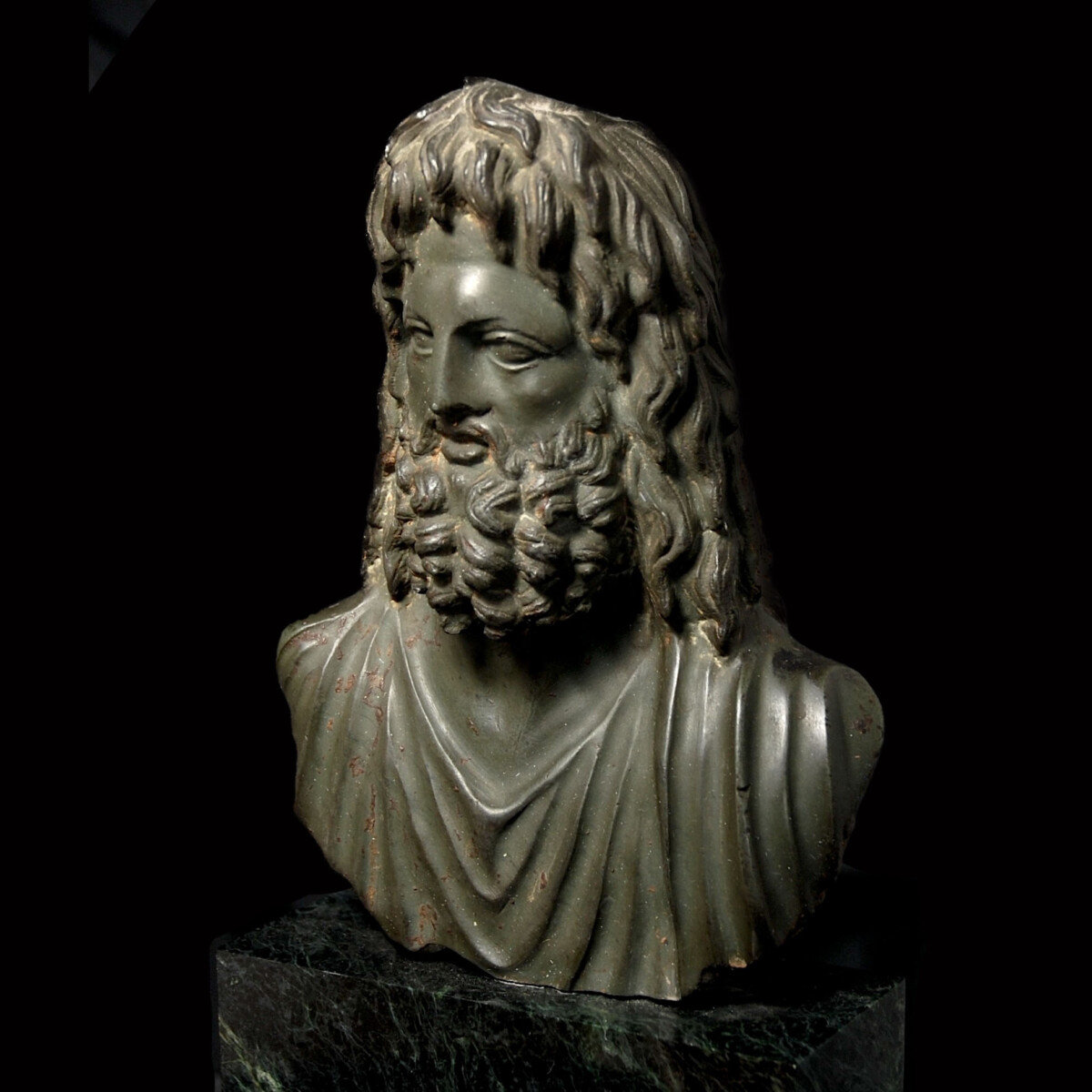
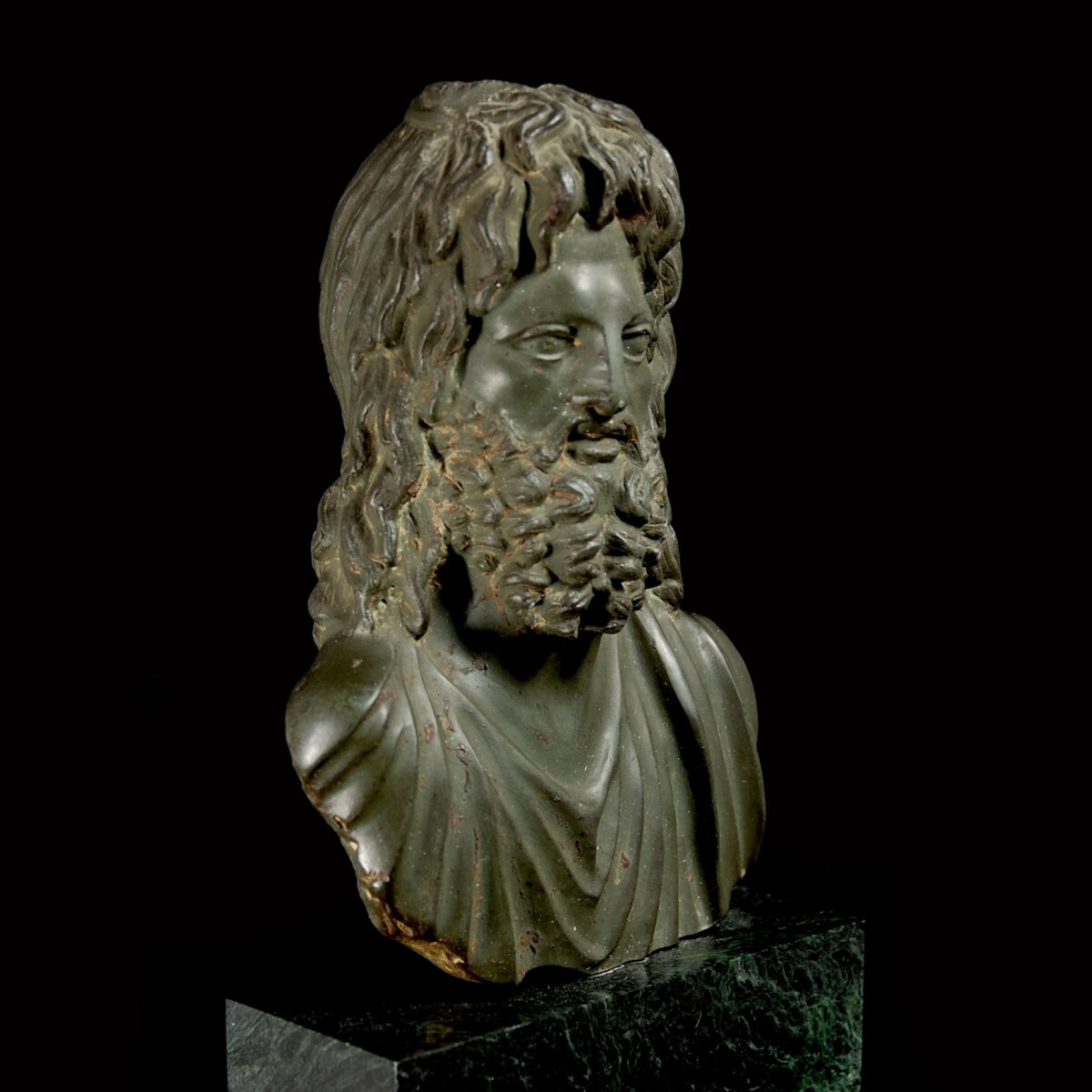
Description: Masterly worked out greywacke bust of Zeus Serapis based on the model that the Greek master Bryaxis created in the late 4th century B.C. for the Serapeum in Alexandria. The 12-meter-high original was destroyed in 391 A.D. by the Christians, preserved were high-quality copies dating to the Roman period, which were made of marble or alabaster throughout . Even more rare and more important is the present greywacke bust, which dates to the 1st century A.D. The head with a slender, angular face, which is framed by thick curls hanging into the forehead and over the temples. Below the nose a massive whisker, which merges into the curly beard. Well-known is the gaze from deeply sat eyes with finely drawn lids, which radiate gentleness and kindness and doubtlessly was copied by the Christians for the depiction of Jesus. Also, the slightly open mouth with the minimally hanging lower lip and the open space below has been established as symbol of gentleness in art history. The long hair cascades on the sides, covers the ears and falls far into the nape in the back. The kalathos, the harvest basket of Serapis, sits on the calotte, where today only parts are preserved. The bust itself is worked out in the Greek “curtain style”. It depicts a tunic and a himation thrown over it with a centrally protruding fold. The high quality of the greywacke underlines the importance of the syncretic God Serapis, who was introduced as an integrative Egyptian Greek empire god by Ptolemaios I and worshiped until far into the Roman period. On a stone base.